Buy lasern.eu ?
We are moving the project
lasern.eu .
Are you interested in purchasing the domain
lasern.eu ?
domain@kv-gmbh.de · 0541-91531010
Buy lasern.eu ?
How do you draw trehalose in a 2-11 glycosidic bond?
To draw trehalose in a 2-11 glycosidic bond, you would first draw two glucose molecules connected by an alpha-1,1 glycosidic bond. Then, you would add another glucose molecule to the first glucose molecule in the 2 position, forming a 1,2 glycosidic bond. Finally, you would add the last glucose molecule to the second glucose molecule in the 1 position, forming a 2,1 glycosidic bond. This structure represents trehalose in a 2-11 glycosidic bond. **
What are the differences between an ionic bond, a metallic bond, and a covalent bond?
Ionic bonds involve the transfer of electrons from one atom to another, resulting in the attraction between oppositely charged ions. Metallic bonds involve the sharing of electrons among a sea of delocalized electrons, creating a strong bond between metal atoms. Covalent bonds involve the sharing of electrons between atoms to achieve a stable electron configuration. Each type of bond has different properties and strengths based on the way electrons are shared or transferred between atoms. **
Similar search terms for Bond-11-Maths-and
Top-Angebote
Products related to Bond-11-Maths-and:
-
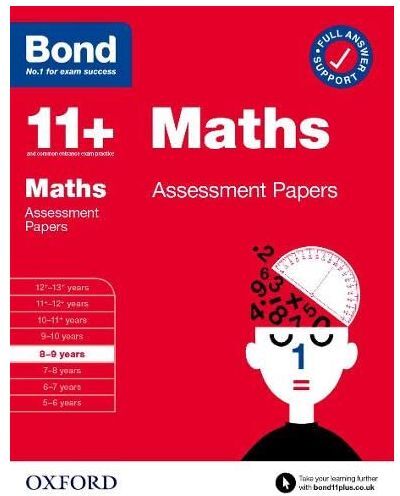
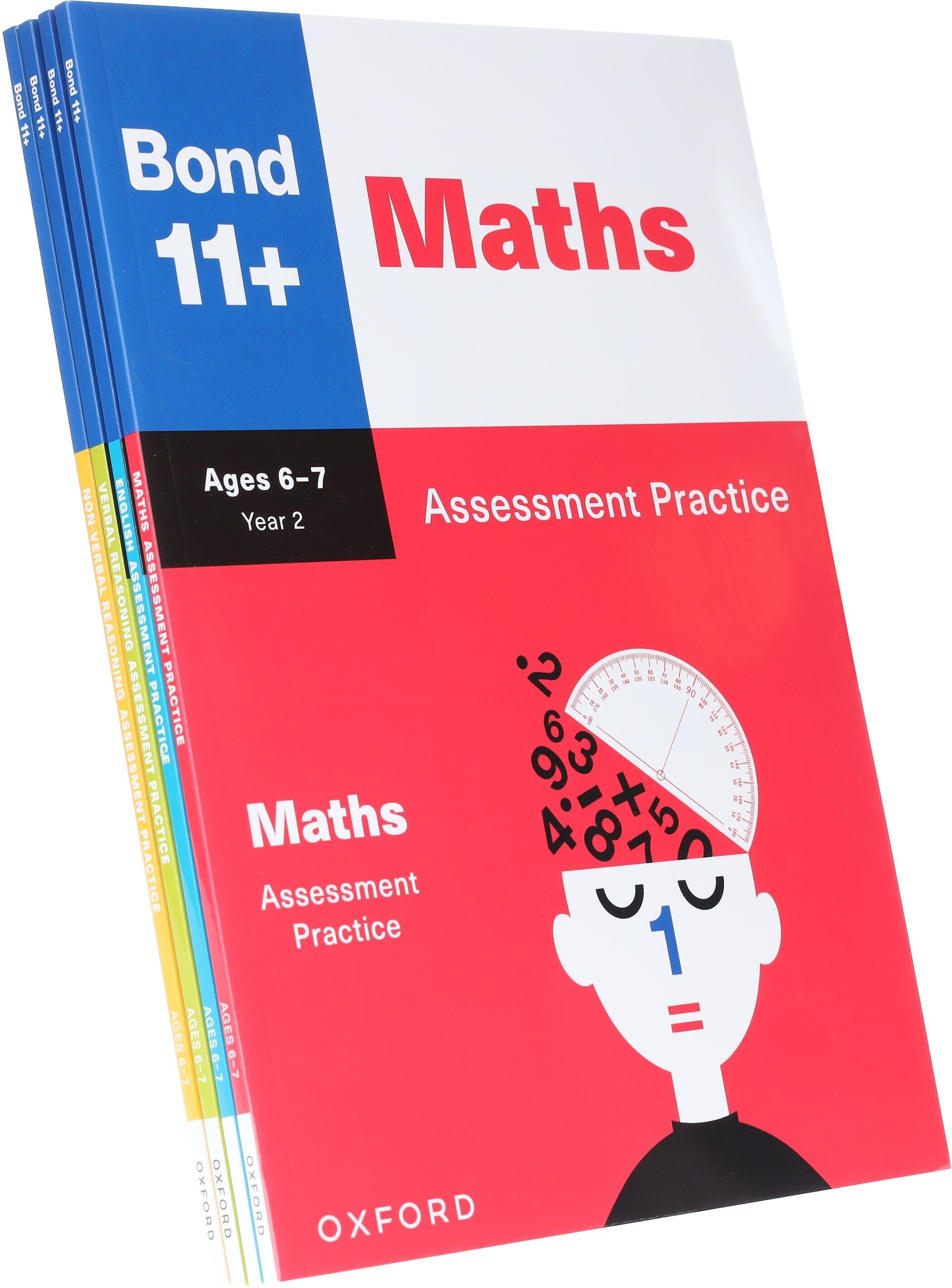
OXFORD UNIVERSITY PRESS Bond 11+ Maths English Verbal Reasoning Non-verbal Reasoning Assessment Papers 4 Books Set - Age 6-7Bond 11+ Maths English Verbal Non-Verbal Reasoning Assessment Practice 6-7 years 4 Books Set (Bond Assessment Papers) Developed and written by experienced tutors, Bond 11+ Assessment Practice Books offer exam-style practice questions, perfect for preparing for the GL 11+ exam and other selective school tests, with full answer explanations in a removable booklet. Bond 11+ English Assessment Practice Age 6-7: Covers all of the core 11+ English exam topics including comprehension, spelling, sentences, punctuation, and grammar Bond 11+ Maths Assessment Practice Age 6-7: Covers a wide variety of maths topics including place value, multiplication and division, fractions, shapes, measurement, and diagrams Bond 11+ Non-verbal Reasoning Assessment Practice Age 6-7: Covers a wide variety of non-verbal reasoning topics including shapes, angles and rotation, similarities, sequences, reflections, and grids Bond 11+ Verbal Reasoning Assessment Practice Age 6-7: Covers a wide variety of verbal reasoning topics including word meanings, word connections, missing letters, patterns and sequences, anagrams, and codes16,99 £*Shipping: 2,99 £Secure redirect to the provider
-
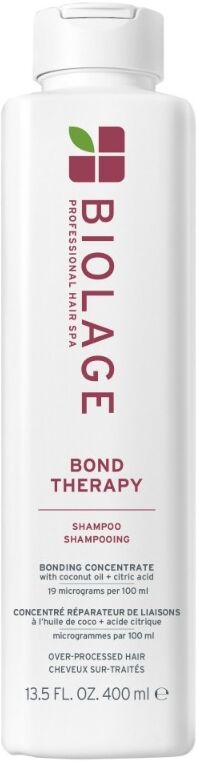
Biolage Bond Therapy Shampoo 400mlThe 'it' product for achieving your strongest strands yet... Create a bond-building moment of self-care for your hair with Biolage's Bond Therapy Shampoo. What does it do? Ideal for over-processed, damaged hair, this nourishing shampoo reinforces weakened bonds from the inside out for strands that are stronger, softer and supremely conditioned without the weight. Key Ingredients The Biolage Bond Therapy Shampoo is infused and micro-dosed with a bonding concentrate of pressed coconut oil and fermented citric acid. The formula has been precisely calibrated down to the microgram to create the perfect levels of restorative conditioning and reparative bonding care. Key Benefits - Reinforces weakened bonds, from the inside out. - Conditions, repairs and restores strands. - Restores strands and repairs bonds. Ingredients AQUA / WATER, DECYL GLUCOSIDE, SODIUM COCOYL ISETHIONATE, COCAMIDOPROPYL BETAINE, CITRIC ACID, SODIUM HYDROXIDE, PANTHENOL, GLYCERIN, DIMETHICONE, PARFUM / FRAGRANCE, PEG-150 DISTEARATE, PPG-5-CETETH-20, SODIUM BENZOATE, SODIUM CHLORIDE, PEG-55 PROPYLENE GLYCOL OLEATE, PROPYLENE GLYCOL, CARBOMER, COCOS NUCIFERA OIL / COCONUT OIL, POLYQUATERNIUM-67, COCO-CAPRYLATE/CAPRATE, SALICYLIC ACID, AMODIMETHICONE, SODIUM PHYTATE, GLYCOL DISTEARATE, LIMONENE, COCO-BETAINE, ACRYLATES/BEHENETH-25 METHACRYLATE COPOLYMER, HEXYL CINNAMAL, COUMARIN, TRIDECETH-6, LINALOOL, AMYL CINNAMAL, ALCOHOL, CETRIMONIUM CHLORIDE23,38 £*Shipping: 0,00 £Secure redirect to the provider
-
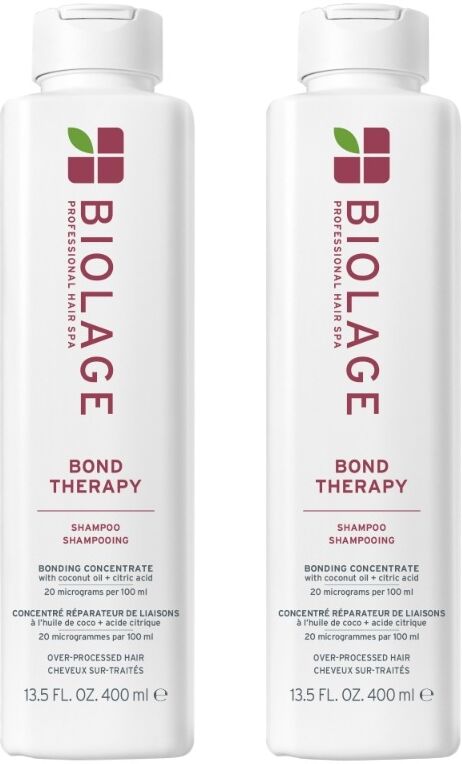
Biolage Bond Therapy Shampoo 400ml DoubleStock up and save on nourished and repaired hair with this double pack of Biolage Bond Therapy Shampoo, 2 x 400ml. For achieving your strongest strands yet... Create a bond-building moment of self-care for your hair with Biolage's Bond Therapy Shampoo. What does it do? Ideal for over-processed, damaged hair, this nourishing shampoo reinforces weakened bonds from the inside out for strands that are stronger, softer and supremely conditioned without the weight. Key Ingredients The Biolage Bond Therapy Shampoo is infused and micro-dosed with a bonding concentrate of pressed coconut oil and fermented citric acid. The formula has been precisely calibrated down to the microgram to create the perfect levels of restorative conditioning and reparative bonding care. Key Benefits - Reinforces weakened bonds from the inside out - Conditions, repairs and restores strands - Restores strands and repairs bonds Ingredients AQUA / WATER, DECYL GLUCOSIDE, SODIUM COCOYL ISETHIONATE, COCAMIDOPROPYL BETAINE, CITRIC ACID, SODIUM HYDROXIDE, PANTHENOL, GLYCERIN, DIMETHICONE, PARFUM / FRAGRANCE, PEG-150 DISTEARATE, PPG-5-CETETH-20, SODIUM BENZOATE, SODIUM CHLORIDE, PEG-55 PROPYLENE GLYCOL OLEATE, PROPYLENE GLYCOL, CARBOMER, COCOS NUCIFERA OIL / COCONUT OIL, POLYQUATERNIUM-67, COCO-CAPRYLATE/CAPRATE, SALICYLIC ACID, AMODIMETHICONE, SODIUM PHYTATE, GLYCOL DISTEARATE, LIMONENE, COCO-BETAINE, ACRYLATES/BEHENETH-25 METHACRYLATE COPOLYMER, HEXYL CINNAMAL, COUMARIN, TRIDECETH-6, LINALOOL, AMYL CINNAMAL, ALCOHOL, CETRIMONIUM CHLORIDE44,00 £*Shipping: 0,00 £Secure redirect to the provider
-
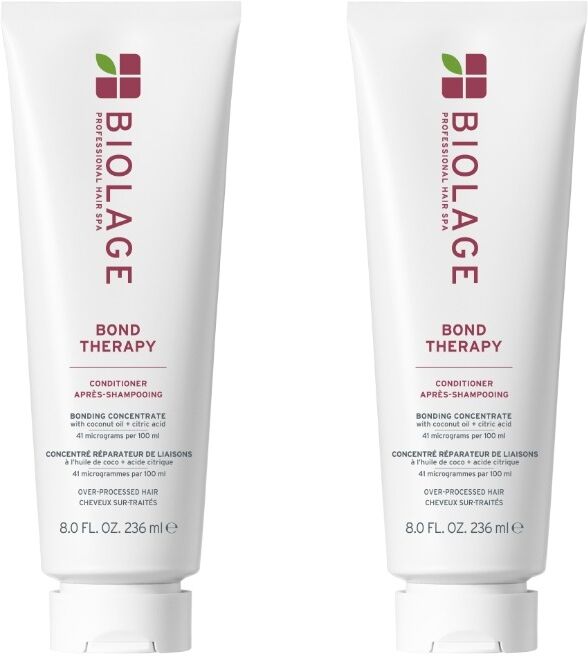
Biolage Bond Therapy Conditioner 236ml DoubleStock up and save on stronger strands with this double pack of the Bond Therapy Conditioner, 2 x 236ml. Keep your bonds strong and your strands nourished with the Bond Therapy Conditioner from Biolage. What does it do? This conditioner is ideal for damaged, over-processed hair, helping to build bonds from the inside out for less breakage and more softness. Key Ingredients Bond Therapy Conditioner is infused and micro-dosed with a bonding concentrate of pressed coconut oil and fermented citric acid, precisely calibrated down to the microgram to create the perfect levels of intense, yet weightless, conditioning and reinforcing bonding care. Key Benefits Strengthens Damaged Hair – Rebuilds and reinforces hair bonds from within to reduce breakage. Deep Yet Weightless Conditioning – Provides intense nourishment without leaving hair heavy or greasy. Ideal for Over-Processed Hair – Specifically formulated to care for chemically treated or heat-damaged strands. Improves Softness and Manageability – Leaves hair feeling smooth, soft, and easier to style. Bonding Care Powered by Nature – Infused with pressed coconut oil and fermented citric acid for targeted repair and protection. Ingredients AQUA / WATER, CETEARYL ALCOHOL, BEHENTRIMONIUM CHLORIDE, DIMETHICONE, ISOPROPYL ALCOHOL, AMODIMETHICONE, SODIUM CITRATE, GLYCERIN, CITRIC ACID, C15-19 ALKANE, DICETYLDIMONIUM CHLORIDE, AMINOPROPYL DIMETHICONE, PARFUM / FRAGRANCE, PHENOXYETHANOL, CETYL ESTERS, HYDROXYPROPYL GUAR, TRIDECETH-6, COCOS NUCIFERA OIL / COCONUT OIL, LIMONENE, DILAURYL THIODIPROPIONATE, CETRIMONIUM CHLORIDE, HEXYL CINNAMAL, COUMARIN, BENZYL ALCOHOL, LINALOOL, AMYL CINNAMAL, TRISODIUM HEDTA36,80 £*Shipping: 0,00 £Secure redirect to the provider
-
What are the differences between a glycosidic bond, a peptide bond, and an ester bond?
Glycosidic bonds are formed between a sugar molecule and another molecule, such as another sugar or a non-carbohydrate compound. Peptide bonds are specific types of covalent bonds that link amino acids together in proteins. Ester bonds are formed between a carboxylic acid and an alcohol, resulting in the formation of an ester. Each of these bonds plays a crucial role in the structure and function of biological molecules, with glycosidic bonds being important in carbohydrates, peptide bonds in proteins, and ester bonds in lipids. **
-
What are the differences between a single bond, a double bond, and a triple bond?
A single bond involves the sharing of one pair of electrons between two atoms, while a double bond involves the sharing of two pairs of electrons. A triple bond involves the sharing of three pairs of electrons between two atoms. As the number of shared electron pairs increases, the bond becomes stronger and shorter. Additionally, double and triple bonds are typically found in molecules with carbon atoms, while single bonds are more common in organic compounds. **
-
What is the relationship between bond length and bond enthalpy?
Bond length and bond enthalpy are inversely related. As the bond length decreases, the bond enthalpy increases. This is because a shorter bond length indicates a stronger bond, requiring more energy to break it. Conversely, a longer bond length indicates a weaker bond, resulting in a lower bond enthalpy. **
-
Why is D an ionic bond and A a hydrogen bond?
D is an ionic bond because it forms between a metal (sodium) and a non-metal (chlorine), resulting in the transfer of electrons from the metal to the non-metal, creating ions with opposite charges that are attracted to each other. A is a hydrogen bond because it forms between a hydrogen atom covalently bonded to an electronegative atom (such as oxygen or nitrogen) and another electronegative atom in a different molecule. This results in a weak electrostatic attraction between the partially positive hydrogen atom and the partially negative atom in the neighboring molecule. **

What is the difference between a covalent bond and an ionic bond?
A covalent bond is formed when two atoms share electrons, resulting in a shared electron cloud between the atoms. This type of bond is typically found between non-metal atoms. On the other hand, an ionic bond is formed when one atom transfers electrons to another atom, resulting in the formation of positively and negatively charged ions that are attracted to each other. Ionic bonds are typically found between a metal and a non-metal atom. **
What is the difference between a peptide bond and an ester bond?
A peptide bond is a covalent bond formed between the carboxyl group of one amino acid and the amino group of another amino acid, linking them together in a protein chain. On the other hand, an ester bond is a covalent bond formed between a carboxylic acid and an alcohol, resulting in the formation of an ester molecule. Peptide bonds are specific to proteins, while ester bonds are commonly found in lipids, such as fats and oils. Additionally, peptide bonds are involved in the primary structure of proteins, determining their sequence, while ester bonds are important for the structure and function of lipids. **
Top-Angebote
Products related to Bond-11-Maths-and:
-
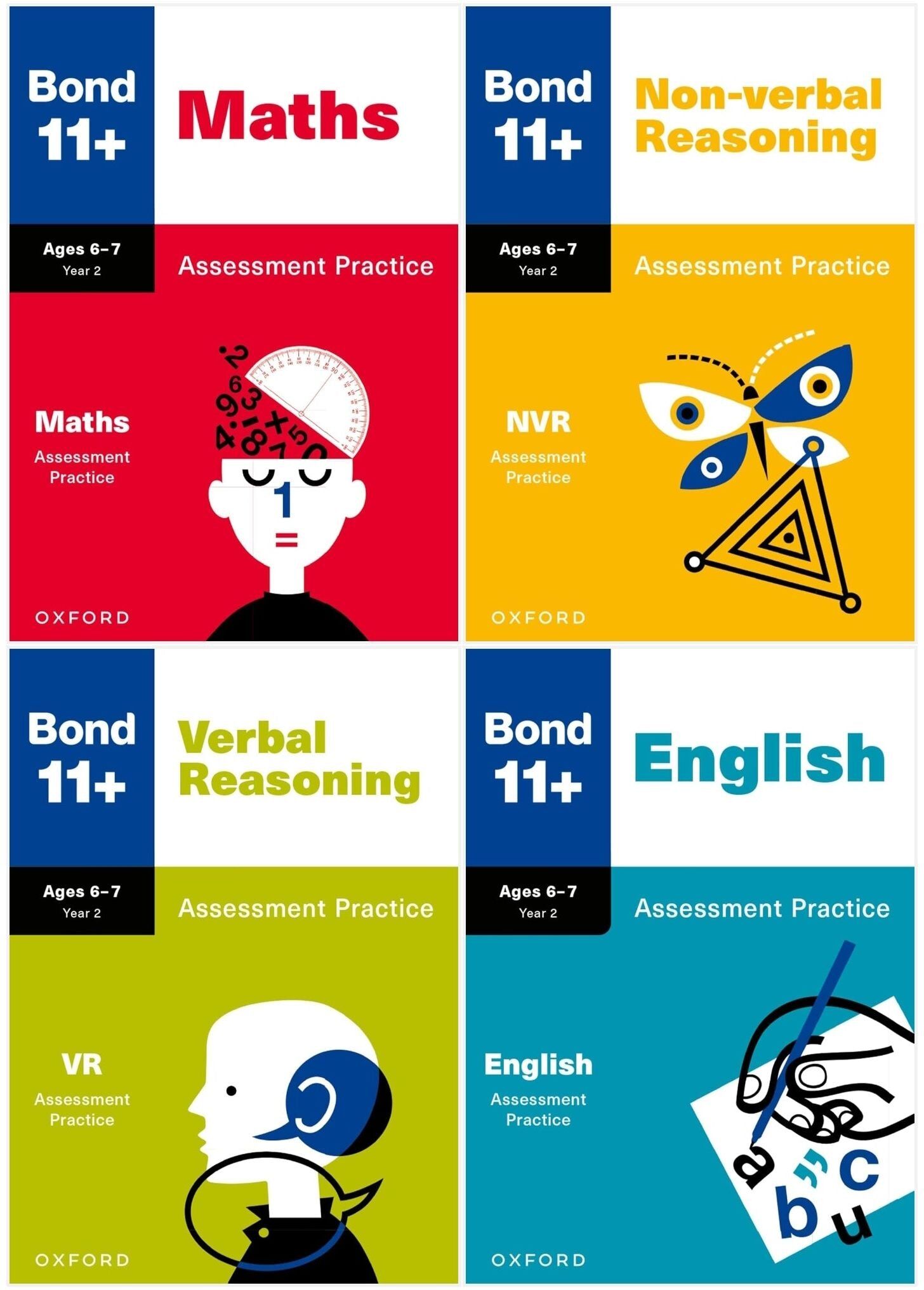
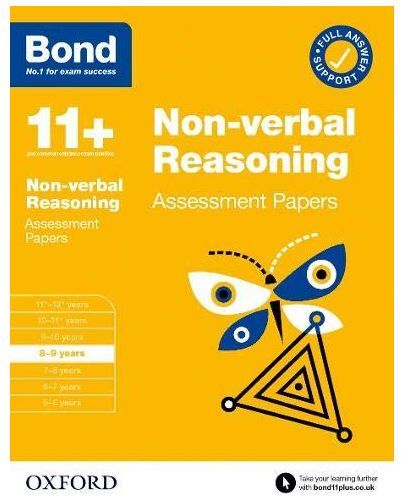
Bond 11+ Maths and English Verbal & Non-Verbal Reasoning Assessment Practice 4 Books Collection Set – Ages 6-7 Years- Paperback Oxford University PressTitles in this Set: 1. Bond 11+ English Assessment Practice 2. Bond 11+ Maths Assessment Practice 3. Bond 11+ Non-verbal Reasoning Assessment Practice 4. Bond 11+ Verbal Reasoning Assessment Practice Description: Bond 11+ English Assessment Practice Bond 11+ English Assessment Practice for age 6-7 years offers accessible practice questions for children starting their journey towards the 11+ test. This fully revised edition includes essential guidance and full answer explanations and will develop the skills that are vital for success. Bond 11+ Maths Assessment Practice Bond 11+ Maths Assessment Practice for age 6-7 years offers accessible practice questions for children starting their journey towards the 11+ test. This fully revised edition includes essential guidance and full answer explanations and will develop the skills that are vital for success. Bond 11+ Non-verbal Reasoning Assessment Practice Bond 11+ Non-verbal Reasoning Assessment Practice for age 6-7 years offers accessible practice questions for children starting their journey towards the 11+ test. This fully revised edition includes essential guidance and full answer explanations and will develop the skills that are vital for success. Bond 11+ Verbal Reasoning Assessment Practice Bond 11+ Verbal Reasoning Assessment Practice for age 6-7 years offers accessible practice questions for children starting their journey towards the 11+ test. This fully revised edition includes essential guidance and full answer explanations and will develop the skills that are vital for success.16,99 £*Shipping: 2,99 £Secure redirect to the provider
-
OXFORD UNIVERSITY PRESS Bond 11+ Maths English Verbal Reasoning Non-verbal Reasoning Assessment Papers 4 Books Set - Age 6-7Bond 11+ Maths English Verbal Non-Verbal Reasoning Assessment Practice 6-7 years 4 Books Set (Bond Assessment Papers) Developed and written by experienced tutors, Bond 11+ Assessment Practice Books offer exam-style practice questions, perfect for preparing for the GL 11+ exam and other selective school tests, with full answer explanations in a removable booklet. Bond 11+ English Assessment Practice Age 6-7: Covers all of the core 11+ English exam topics including comprehension, spelling, sentences, punctuation, and grammar Bond 11+ Maths Assessment Practice Age 6-7: Covers a wide variety of maths topics including place value, multiplication and division, fractions, shapes, measurement, and diagrams Bond 11+ Non-verbal Reasoning Assessment Practice Age 6-7: Covers a wide variety of non-verbal reasoning topics including shapes, angles and rotation, similarities, sequences, reflections, and grids Bond 11+ Verbal Reasoning Assessment Practice Age 6-7: Covers a wide variety of verbal reasoning topics including word meanings, word connections, missing letters, patterns and sequences, anagrams, and codes16,99 £*Shipping: 2,99 £Secure redirect to the provider
-
Biolage Bond Therapy Shampoo 400mlThe 'it' product for achieving your strongest strands yet... Create a bond-building moment of self-care for your hair with Biolage's Bond Therapy Shampoo. What does it do? Ideal for over-processed, damaged hair, this nourishing shampoo reinforces weakened bonds from the inside out for strands that are stronger, softer and supremely conditioned without the weight. Key Ingredients The Biolage Bond Therapy Shampoo is infused and micro-dosed with a bonding concentrate of pressed coconut oil and fermented citric acid. The formula has been precisely calibrated down to the microgram to create the perfect levels of restorative conditioning and reparative bonding care. Key Benefits - Reinforces weakened bonds, from the inside out. - Conditions, repairs and restores strands. - Restores strands and repairs bonds. Ingredients AQUA / WATER, DECYL GLUCOSIDE, SODIUM COCOYL ISETHIONATE, COCAMIDOPROPYL BETAINE, CITRIC ACID, SODIUM HYDROXIDE, PANTHENOL, GLYCERIN, DIMETHICONE, PARFUM / FRAGRANCE, PEG-150 DISTEARATE, PPG-5-CETETH-20, SODIUM BENZOATE, SODIUM CHLORIDE, PEG-55 PROPYLENE GLYCOL OLEATE, PROPYLENE GLYCOL, CARBOMER, COCOS NUCIFERA OIL / COCONUT OIL, POLYQUATERNIUM-67, COCO-CAPRYLATE/CAPRATE, SALICYLIC ACID, AMODIMETHICONE, SODIUM PHYTATE, GLYCOL DISTEARATE, LIMONENE, COCO-BETAINE, ACRYLATES/BEHENETH-25 METHACRYLATE COPOLYMER, HEXYL CINNAMAL, COUMARIN, TRIDECETH-6, LINALOOL, AMYL CINNAMAL, ALCOHOL, CETRIMONIUM CHLORIDE23,38 £*Shipping: 0,00 £Secure redirect to the provider
-
How do you draw trehalose in a 2-11 glycosidic bond?
To draw trehalose in a 2-11 glycosidic bond, you would first draw two glucose molecules connected by an alpha-1,1 glycosidic bond. Then, you would add another glucose molecule to the first glucose molecule in the 2 position, forming a 1,2 glycosidic bond. Finally, you would add the last glucose molecule to the second glucose molecule in the 1 position, forming a 2,1 glycosidic bond. This structure represents trehalose in a 2-11 glycosidic bond. **
-
What are the differences between an ionic bond, a metallic bond, and a covalent bond?
Ionic bonds involve the transfer of electrons from one atom to another, resulting in the attraction between oppositely charged ions. Metallic bonds involve the sharing of electrons among a sea of delocalized electrons, creating a strong bond between metal atoms. Covalent bonds involve the sharing of electrons between atoms to achieve a stable electron configuration. Each type of bond has different properties and strengths based on the way electrons are shared or transferred between atoms. **
-
What are the differences between a glycosidic bond, a peptide bond, and an ester bond?
Glycosidic bonds are formed between a sugar molecule and another molecule, such as another sugar or a non-carbohydrate compound. Peptide bonds are specific types of covalent bonds that link amino acids together in proteins. Ester bonds are formed between a carboxylic acid and an alcohol, resulting in the formation of an ester. Each of these bonds plays a crucial role in the structure and function of biological molecules, with glycosidic bonds being important in carbohydrates, peptide bonds in proteins, and ester bonds in lipids. **
-
What are the differences between a single bond, a double bond, and a triple bond?
A single bond involves the sharing of one pair of electrons between two atoms, while a double bond involves the sharing of two pairs of electrons. A triple bond involves the sharing of three pairs of electrons between two atoms. As the number of shared electron pairs increases, the bond becomes stronger and shorter. Additionally, double and triple bonds are typically found in molecules with carbon atoms, while single bonds are more common in organic compounds. **
Similar search terms for Bond-11-Maths-and
-
Biolage Bond Therapy Shampoo 400ml DoubleStock up and save on nourished and repaired hair with this double pack of Biolage Bond Therapy Shampoo, 2 x 400ml. For achieving your strongest strands yet... Create a bond-building moment of self-care for your hair with Biolage's Bond Therapy Shampoo. What does it do? Ideal for over-processed, damaged hair, this nourishing shampoo reinforces weakened bonds from the inside out for strands that are stronger, softer and supremely conditioned without the weight. Key Ingredients The Biolage Bond Therapy Shampoo is infused and micro-dosed with a bonding concentrate of pressed coconut oil and fermented citric acid. The formula has been precisely calibrated down to the microgram to create the perfect levels of restorative conditioning and reparative bonding care. Key Benefits - Reinforces weakened bonds from the inside out - Conditions, repairs and restores strands - Restores strands and repairs bonds Ingredients AQUA / WATER, DECYL GLUCOSIDE, SODIUM COCOYL ISETHIONATE, COCAMIDOPROPYL BETAINE, CITRIC ACID, SODIUM HYDROXIDE, PANTHENOL, GLYCERIN, DIMETHICONE, PARFUM / FRAGRANCE, PEG-150 DISTEARATE, PPG-5-CETETH-20, SODIUM BENZOATE, SODIUM CHLORIDE, PEG-55 PROPYLENE GLYCOL OLEATE, PROPYLENE GLYCOL, CARBOMER, COCOS NUCIFERA OIL / COCONUT OIL, POLYQUATERNIUM-67, COCO-CAPRYLATE/CAPRATE, SALICYLIC ACID, AMODIMETHICONE, SODIUM PHYTATE, GLYCOL DISTEARATE, LIMONENE, COCO-BETAINE, ACRYLATES/BEHENETH-25 METHACRYLATE COPOLYMER, HEXYL CINNAMAL, COUMARIN, TRIDECETH-6, LINALOOL, AMYL CINNAMAL, ALCOHOL, CETRIMONIUM CHLORIDE44,00 £*Shipping: 0,00 £Secure redirect to the provider
-
Biolage Bond Therapy Conditioner 236ml DoubleStock up and save on stronger strands with this double pack of the Bond Therapy Conditioner, 2 x 236ml. Keep your bonds strong and your strands nourished with the Bond Therapy Conditioner from Biolage. What does it do? This conditioner is ideal for damaged, over-processed hair, helping to build bonds from the inside out for less breakage and more softness. Key Ingredients Bond Therapy Conditioner is infused and micro-dosed with a bonding concentrate of pressed coconut oil and fermented citric acid, precisely calibrated down to the microgram to create the perfect levels of intense, yet weightless, conditioning and reinforcing bonding care. Key Benefits Strengthens Damaged Hair – Rebuilds and reinforces hair bonds from within to reduce breakage. Deep Yet Weightless Conditioning – Provides intense nourishment without leaving hair heavy or greasy. Ideal for Over-Processed Hair – Specifically formulated to care for chemically treated or heat-damaged strands. Improves Softness and Manageability – Leaves hair feeling smooth, soft, and easier to style. Bonding Care Powered by Nature – Infused with pressed coconut oil and fermented citric acid for targeted repair and protection. Ingredients AQUA / WATER, CETEARYL ALCOHOL, BEHENTRIMONIUM CHLORIDE, DIMETHICONE, ISOPROPYL ALCOHOL, AMODIMETHICONE, SODIUM CITRATE, GLYCERIN, CITRIC ACID, C15-19 ALKANE, DICETYLDIMONIUM CHLORIDE, AMINOPROPYL DIMETHICONE, PARFUM / FRAGRANCE, PHENOXYETHANOL, CETYL ESTERS, HYDROXYPROPYL GUAR, TRIDECETH-6, COCOS NUCIFERA OIL / COCONUT OIL, LIMONENE, DILAURYL THIODIPROPIONATE, CETRIMONIUM CHLORIDE, HEXYL CINNAMAL, COUMARIN, BENZYL ALCOHOL, LINALOOL, AMYL CINNAMAL, TRISODIUM HEDTA36,80 £*Shipping: 0,00 £Secure redirect to the provider
-
Biolage Bond Therapy Intensive Treatment 150mlBring added repair to your routine with the Biolage Bond Therapy Intensive Treatment. This pre-shampoo treatment deeply conditions and builds bonds from the inside out, leaving over-processed, damaged hair looking and feeling noticeably healthier. Key Ingredients The Bond Therapy Intensive Treatment is infused and micro-dosed with a bonding concentrate of pressed coconut oil and fermented citric acid, precisely calibrated down to the microgram to create the perfect levels of nourishment and bonding care for supreme strength and softness. Key Benefits: - Deeply repairs damaged hair by rebuilding bonds from the inside out - Strengthens over-processed hair, improving resilience and structure - Pre-shampoo treatment that enhances the effectiveness of your overall routine - Infused with pressed coconut oil for deep nourishment and softness - Contains fermented citric acid to support internal hair bonding and repair - Leaves hair visibly healthier, smoother, and more manageable Ingredients AQUA / WATER, CETEARYL ALCOHOL, GLYCERIN, BEHENTRIMONIUM CHLORIDE, STEARYL ALCOHOL, CITRIC ACID, CETYL ESTERS, SODIUM CITRATE, ISOPROPYL ALCOHOL, PARFUM / FRAGRANCE, PHENOXYETHANOL, POLYQUATERNIUM-10, POLYSORBATE 20, HYDROXYPROPYL GUAR, LIMONENE, COCOS NUCIFERA OIL / COCONUT OIL, HEXYL CINNAMAL, COUMARIN, BENZYL ALCOHOL, LINALOOL, AMYL CINNAMAL17,43 £*Shipping: 2,95 £Secure redirect to the provider
-
What is the relationship between bond length and bond enthalpy?
Bond length and bond enthalpy are inversely related. As the bond length decreases, the bond enthalpy increases. This is because a shorter bond length indicates a stronger bond, requiring more energy to break it. Conversely, a longer bond length indicates a weaker bond, resulting in a lower bond enthalpy. **
-
Why is D an ionic bond and A a hydrogen bond?
D is an ionic bond because it forms between a metal (sodium) and a non-metal (chlorine), resulting in the transfer of electrons from the metal to the non-metal, creating ions with opposite charges that are attracted to each other. A is a hydrogen bond because it forms between a hydrogen atom covalently bonded to an electronegative atom (such as oxygen or nitrogen) and another electronegative atom in a different molecule. This results in a weak electrostatic attraction between the partially positive hydrogen atom and the partially negative atom in the neighboring molecule. **
-
What is the difference between a covalent bond and an ionic bond?
A covalent bond is formed when two atoms share electrons, resulting in a shared electron cloud between the atoms. This type of bond is typically found between non-metal atoms. On the other hand, an ionic bond is formed when one atom transfers electrons to another atom, resulting in the formation of positively and negatively charged ions that are attracted to each other. Ionic bonds are typically found between a metal and a non-metal atom. **
-
What is the difference between a peptide bond and an ester bond?
A peptide bond is a covalent bond formed between the carboxyl group of one amino acid and the amino group of another amino acid, linking them together in a protein chain. On the other hand, an ester bond is a covalent bond formed between a carboxylic acid and an alcohol, resulting in the formation of an ester molecule. Peptide bonds are specific to proteins, while ester bonds are commonly found in lipids, such as fats and oils. Additionally, peptide bonds are involved in the primary structure of proteins, determining their sequence, while ester bonds are important for the structure and function of lipids. **
* All prices are inclusive of VAT and, if applicable, plus shipping costs. The offer information is based on the details provided by the respective shop and is updated through automated processes. Real-time updates do not occur, so deviations can occur in individual cases. ** Note: Parts of this content were created by AI.